
Clear the surface, choose one tallest piece and gather smaller objects beside it. Leave an uninterrupted empty area and give everyday items a proper home. Check the arrangement against the picture or mirror above it, then change one small group when the season turns.

Start with what you need the surface to do
Take everything off your dresser or sideboard before rearranging it. Separate the objects you use each day from the pieces you want to display. Put letters, receipts and spare cables where they belong before deciding how much space you have for decoration.
For a bedroom dresser, reserve an accessible spot for the things you put down while getting ready. On a hallway chest, test where your keys and phone naturally land. On a living-room sideboard, decide whether a remote control needs a place. Keep that area usable as you add the decorative pieces.
Choose one tallest piece
Place a vase slightly to one side and look at it from the doorway. If there is artwork above the sideboard, try positioning the tallest part near an outer edge of the picture. Keep its main subject visible from your usual seat. Include stems in this check: the complete arrangement may reach much higher and wider than the vase.
The Maia leaf-relief vase comes in five sizes from 17 to 32 cm. Side lighting creates a play of shadows across its leaf relief. To make that surface detail the focus of your arrangement, start with a simple frame or plain object beside it before introducing another pattern.
With a mirror, check the arrangement while actually using the reflection. Move tall branches away from the area where you need to see your face. Look at the reflected objects too; a collection hidden behind the vase may be fully visible in the mirror.
Build a small group with different heights
Try three objects as a starting point: a tall vase, a smaller frame and a low box. Bring them close enough to form a group, then move the lower object slightly forward. Keep the frame visible and leave enough room to lift or open the box without shifting the other pieces.
Use odd numbers as a starting suggestion. A pair can be enough, particularly if you want a quiet arrangement with useful empty space beside it. The Aura vase set contains two vases measuring 20 and 24 cm, with a minimalist monochromatic design and perforated surface. Try the pair on its own before deciding whether a third object would add anything.
Leave a clear stretch of surface beyond the group. Small gaps between every object can still leave the whole top occupied. Step back, remove one piece and compare. If you prefer the arrangement without it, keep it elsewhere or bring it out for a later change.
Sideboard decor idea: a 120 × 45 cm surface below artwork
For a sideboard 120 cm wide and 45 cm deep, try the following layout. These are suggested zones for a hypothetical room, rather than product measurements or a fixed styling formula. Check the actual footprint of each object before choosing it.
- Roughly 40 cm on the left: place the main group of a vase, small frame and low box. Move the tallest part towards the outside edge of the artwork.
- Roughly 45 cm in the middle: leave this section clear. View the exposed surface and the picture together before adding anything else.
- Roughly 35 cm on the right: try one low personal item, such as a favourite book laid flat. Leave the area empty if the arrangement already feels complete.
The 45 cm depth gives you room to try objects at different distances from the wall. You do not need to fill the top to its front edge. Make sure the box is easy to reach and the frame behind it is still worth displaying. If the objects do not fit comfortably within the suggested zone, remove one or change the zone widths.
Now compare that arrangement with seven small ornaments spaced evenly across the full width. The row asks you to look at every object in turn and leaves no substantial clear section. Group three of the pieces, put the others aside and view the result from the same position. This gives you a practical comparison using things you already own.
A smaller layout: an 80 cm hallway chest
Begin with the side closest to the door. In this example, reserve about 30 cm of width for everyday items and put the decorative group at the opposite end. Start with one vase and a low box. Add another object only after checking that your phone has a clear place to land.
Measure the depth separately. An 80 cm width alone does not tell you whether a particular vase will fit. Try reaching for your keys, opening the box and looking in the mirror without rearranging anything. If you keep moving a decorative piece, reduce the group or shift it away from the area you use.
For a bedroom dresser, make the same check with your own morning routine. A display that occupies the place where you get ready needs a smaller footprint. Choose the amount of decoration after reserving that working space.
Repeat one detail and contain the small things
Choose a connection between the objects: one colour from the artwork, a wood finish already present in a frame, or a repeated surface pattern. With a colourful print above the sideboard, try picking out one of its quieter shades. Assess any further colours against that combination before adding them.
The Maia storage box has a screw-on lid and leaf relief on both the body and lid, matching the relief of the Maia vase. It offers a way to repeat a detail across a pair. Check that the items you intend to put inside actually fit and that opening the lid suits how often you need them.
Keep occasional-use items in a drawer if they do not need to be on display. For things you pick up several times a day, test how convenient the storage is. If the contents keep ending up beside the box, change their location or choose a more accessible arrangement.
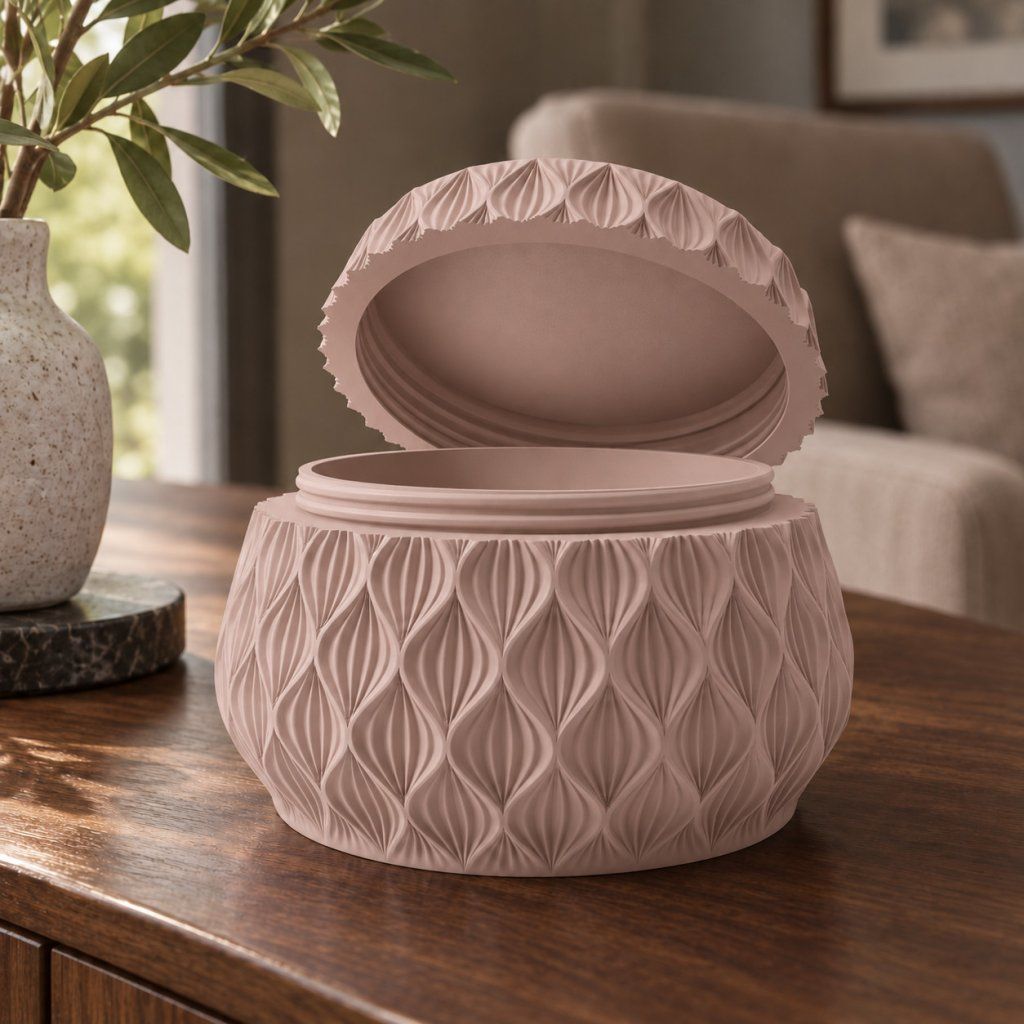
Change one group with the season
Choose one part of the display for seasonal changes. Swap the branches in spring, replace a frame with an autumn decoration, or exchange that same group for a Christmas arrangement. Put the previous pieces away as the new ones come out. Keep the clear section and your everyday landing space throughout the year.
A dining table needs its own arrangement around place settings and serving space. For that surface, use the separate guide to Christmas table decorations with a low centrepiece.
Common dresser decor questions
Does the vase have to sit in the centre?
No. Try it near one side of the artwork or mirror and check the view from the doorway. Leaving the centre clear may suit the picture and the way you use the surface.
What if I want to display a whole collection?
Select a small group and rotate the pieces. If seeing the complete collection matters more, give it a dedicated display area that leaves your everyday landing space available.
How do I know when to stop adding things?
Check that the main object is easy to see, a substantial patch of surface remains clear and daily items are easy to reach. Then remove the last piece you added and compare the two versions.